
Our Story
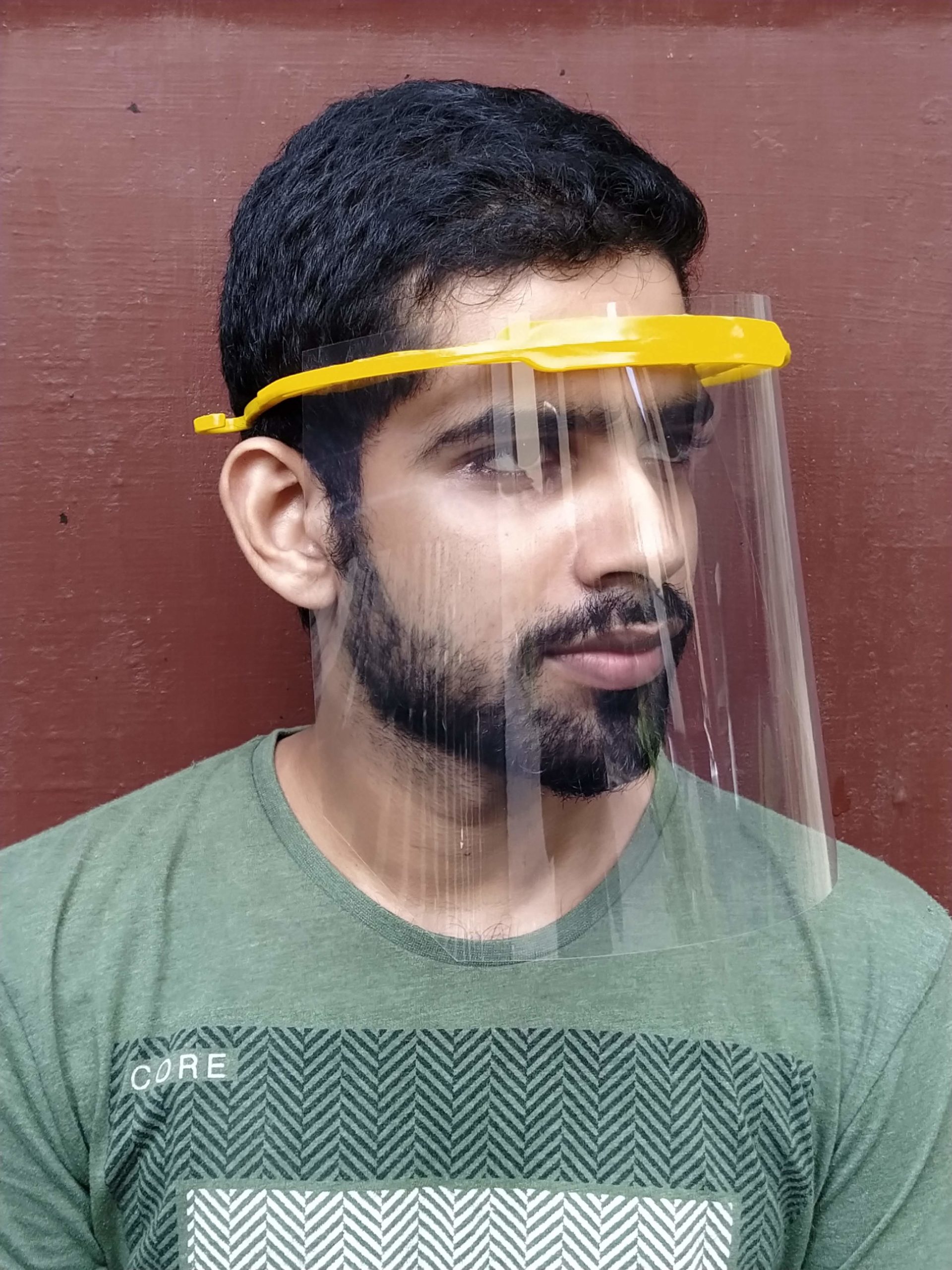
I am Mathew Varghese, an electronics engineer with a longstanding interest in building things beyond the boundaries of my formal discipline. That curiosity has repeatedly drawn me toward areas such as product design, manufacturing, robotics, and artificial intelligence.
My journey into entrepreneurship began during my first year of engineering college, when my friend Aravind and I built our own 3D printer. At the time, desktop 3D printing still felt almost like black magic to us. We spent countless hours experimenting with the machine, learning CAD, troubleshooting prints, and figuring out how digital designs could be transformed into physical products.
That experimentation eventually led Aravind and me to start Mak3rspace, an informal rapid-prototyping venture. Through Mak3rspace, we took on small engineering and fabrication projects, earned enough to support our student experiments, and participated in competitions and initiatives that brought recognition to our work. More importantly, Mak3rspace gave me practical experience in taking a design from an idea on a computer screen to a physical product that someone could actually use.
I graduated in 2019 and decided to take some time before graduate school to explore what I wanted to do next. I had received admissions to graduate programs including the University of Michigan, the University of Maryland, and Monash University, with interests spanning robotics, artificial intelligence, and systems engineering.
Then COVID-19 changed everything.
As the pandemic spread in early 2020, healthcare institutions in Kerala were facing shortages of personal protective equipment. Through Mak3rspace, I began using our 3D printers to manufacture face shields for healthcare workers.
Mak3rspace became part of a broader volunteer effort that was coordinating with the Kerala government to address the PPE shortage. The overall initiative supplied more than 5,000 face shields, and Mak3rspace directly manufactured approximately 2,000 of them. These shields were intended primarily for frontline healthcare personnel at a time when conventional PPE supply chains were under severe pressure.
At first, I did not publicize what we were doing. I felt that charitable work should speak for itself. Looking back, I realized that greater visibility could also have attracted additional volunteers, materials, and manufacturing resources at a time when they were urgently needed.
The transition from this volunteer effort to a commercial venture happened almost accidentally.
During the early phase of the pandemic, I rarely went outside. One day, however, a craving for jalebi convinced me to visit a nearby bakery. I wore one of the face shields I had made.
The bakery owner noticed it and asked me about it. I gave him one the following day. His customers began asking where they could get similar shields, and he came back asking for more.
That was my first clear indication of commercial demand.
Using the existing Mak3rspace 3D-printing setup, I began producing shields for sale. Within roughly two weeks, more than 100 units were sold at approximately ₹120 each.
But there was an obvious problem: 3D printing was far too slow for the level of demand that was emerging. A single 3D-printed shield frame required roughly 15 minutes to manufacture.
The bakery owner suggested that I investigate plastic molding.
That suggestion changed the direction of the project.
To turn the product into a scalable business, I teamed up with Vaishnavi and Gauri and helped establish Veil Healthcare Solutions, where I served as Managing Partner and led most of the engineering and operational work. Aravind, my Mak3rspace co-founder, was not a co-founder of Veil, although he later helped me with some supplier sourcing.
Gauri’s father operated a plastic-molding business and gave Veil access to existing manufacturing infrastructure on a piece-rate basis. This was important because it allowed us to move into industrial production without the enormous capital expense of building an injection-molding facility from scratch.
The challenge was not simply to take the 3D-printed model and manufacture it in plastic. A design that works for additive manufacturing cannot necessarily be injection molded reliably.
I personally led the product design, CAD development, prototyping, redesign for injection molding, supplier development, manufacturing setup, operations, company formation, and technology development supporting production planning. Sales were a shared effort, with Vaishnavi and Gauri contributing significantly to customer acquisition and business development.
I led the redesign of the face shield for injection molding. The geometry had to be modified so that the finished frame could be ejected reliably from the heavy metal mold while remaining comfortable, functional, durable, and inexpensive to manufacture.
I used our 3D-printing capability to rapidly iterate on the design before committing to production tooling. The initial idea took shape during the first national lockdown in spring 2020, and the first 3D-printed units were sold that May. By late May I had developed the injection-moldable version of the product. The production mold was commissioned at the end of May, and full injection-molded production began by approximately mid-June.
The improvement in manufacturing throughput was dramatic.
The original 3D-printing process produced approximately one frame every 15 minutes. The injection-molded process could produce approximately two frames per minute.
This represented roughly a 30-fold increase in theoretical production throughput.
Scaling production created another major challenge: maintaining a reliable supply of raw materials during the disruption caused by COVID-19.
One of the most important components was the transparent PET sheet used for the visor. Normal industrial supply chains had been severely disrupted by lockdowns, while customer demand was changing unpredictably.
I led the search for alternative material sources, including suppliers identified through IndiaMART and smaller plastics distributors that held surplus PET inventory because other industries had temporarily shut down.
I also built an exploratory machine-learning model on Veil’s own sales history — a gradient-boosted regressor over trailing weekly and monthly sales, fitted to predict the following week’s demand. The aim was to anticipate raw-material requirements rather than react to orders, because supplier availability, material lead times and customer demand could all change abruptly during the pandemic.
The model never became accurate enough to run procurement on, and it stayed an experiment rather than a system the business depended on.
For me it was an early attempt at applying machine learning to a real operational problem rather than an academic one — using my own company’s sales history, on a business I was running.
As Managing Partner, I coordinated much of Veil’s day-to-day operations while working with Vaishnavi and Gauri on sales and with the molding facility on production. At peak periods, manufacturing operated around the clock.
Demand grew primarily through referrals and word of mouth. Veil eventually supplied face shields to healthcare institutions in Ernakulam district including San Jose Hospital, MVJM Hospital, Rajagiri Hospital, and Medical Trust Hospital. The company also supplied prominent institutions including Cochin International Airport and the High Court of Kerala.
What had started with a few 3D printers ultimately became a significant commercial manufacturing operation.
Over the life of the business, Veil supplied approximately 100,000 face shields.
For me, the significance of the experience went beyond revenue or the number of units sold. It gave me the opportunity to personally lead almost every stage of the engineering and commercialization process.
I went from identifying a problem and building an initial prototype to validating commercial demand, redesigning a product for mass manufacturing, developing production tooling, establishing a supply chain during an unprecedented disruption, experimenting with machine learning to forecast demand, coordinating manufacturing, forming and operating a company, and delivering products to hospitals and major institutions.
In 2022, as vaccination increased and the emergency demand for face shields declined, the market naturally contracted. At around the same time, I moved to the United States to pursue my master’s degree. Because I had been managing most of Veil’s operations, my departure, together with the decline in pandemic-driven demand, led the partnership to gradually wind down its operations.
Veil was closely tied to a particular moment in history, but the experience fundamentally shaped the way I approach engineering.
It taught me that engineering is not simply about creating technology. Bringing a product into the real world requires understanding users, designing for manufacturability, building supply chains, managing production, using data to anticipate operational needs, responding quickly to constraints, and ultimately delivering a useful product at scale.
What began with a student-built 3D printer ultimately led me through rapid prototyping, emergency manufacturing, entrepreneurship, machine learning, supply-chain planning, and high-volume production—and reinforced my desire to keep exploring engineering problems beyond the boundaries of any single field.